Lightning protection classes
Lightning protection class and classification
Before a lightning protection system is planned, the object to be protected must be assigned to one of four lightning protection classes. Efficiency in lightning protection class I is the highest at 98% and, in lightning protection class IV, the lowest at 81% (see table of hazard parameters). The cost and time involved in erecting a lightning protection system (e.g. necessary protective angle and spacings of grids and arresters) is more involved for lightning protection class I systems than for lightning protection class IV systems.
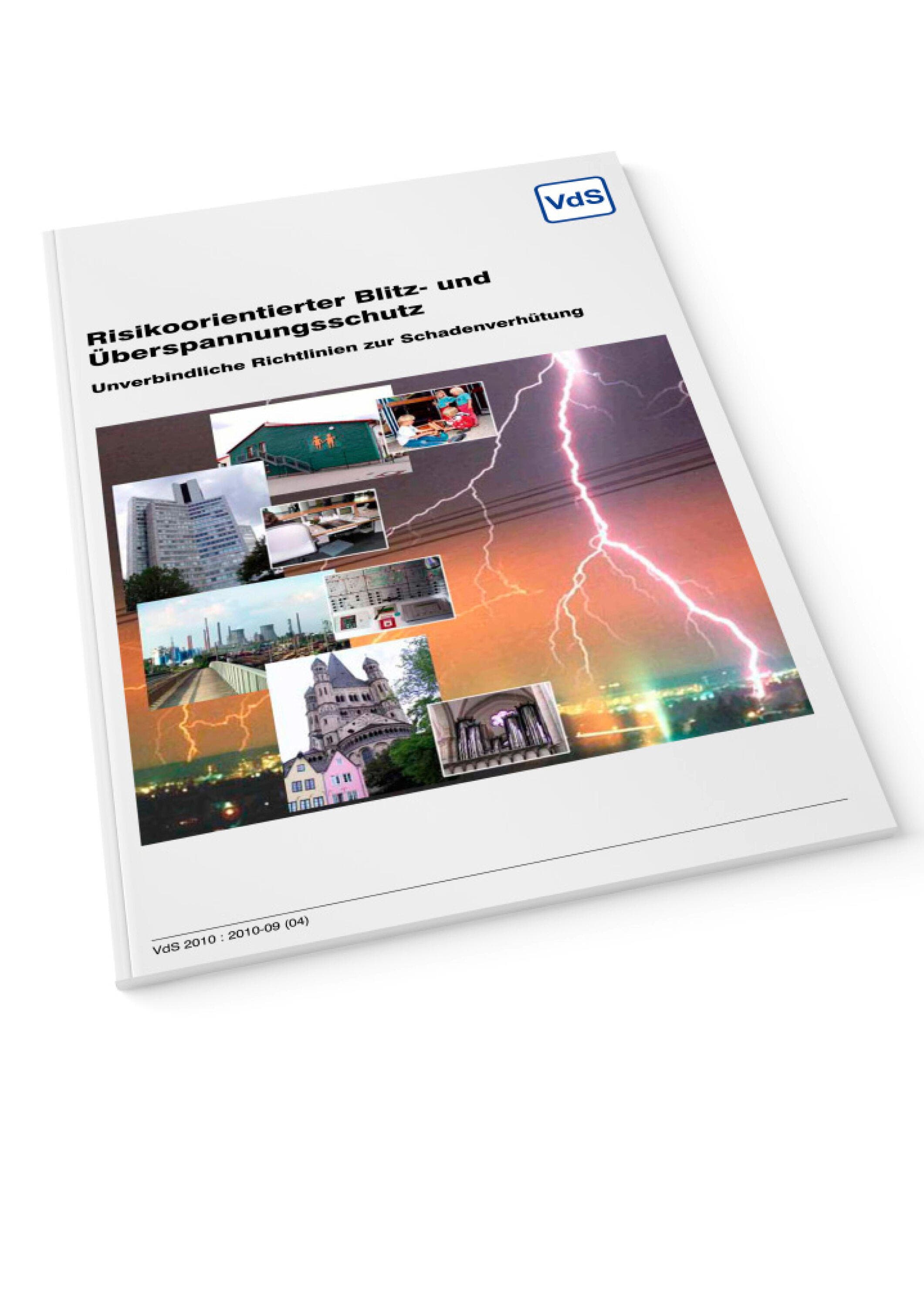
VdS Directive
The required lightning protection class is determined by assessing the damage risk in accordance with DIN EN 62305-2 (IEC 62305-2), unless specified in regulations. Directive VdS 2010 (risk-oriented lightning and surge protection), published by Gesamtverband der Deutschen Versicherungswirtschaft e . V. (GDV) offers an alternative method of determining the lightning protection class.
You can obtain further information at www.vds.de , via the OBO Customer Service +49 (0)2373 89-1500 or on our website.
Hazard parameters in dependence of lightning protection classes
| Lightning protection class | Min. lightning current peak value | Max. lightning current peak value | Probability of air termination |
| I | 3 kA | 200 kA | 98% |
| II | 5 kA | 150 kA | 95% |
| III | 10 kA | 100 kA | 88% |
| IV | 16 kA | 100 kA | 81% |
Lightning protection classes based on Directive VdS 2010
| Application area | Lightning protection class |
| Computer centres, military applications, nuclear power stations | I |
| Ex zones in industry and the chemicals sector | II |
| Photovoltaic systems > 10 kW | III |
| Museums, schools, hotels with more than 60 beds | III |
| Hospitals, churches, storage facilities, meeting places accommodating more than 100 to 200 people | III |
| Administrative buildings, sales points, offices and bank buildings of over 2,000 m² | III |
| Residential buildings with more than 20 apartments, multi-storey buildings over 22 m high | III |
| Photovoltaics | III |


